
OCD Treatment in Brisbane
If obsessive thoughts and compulsive behaviours are significantly affecting your daily life, and standard therapy has not provided enough relief, a specialist OCD clinic may be the right next step. At Nundah Private Hospital, we provide evidence-based OCD treatment in Brisbane within a dedicated private mental health hospital. Our experienced psychiatrist-led multidisciplinary team delivers comprehensive assessment and personalised treatment using the most effective approaches for Obsessive Compulsive Disorder (OCD), including Exposure and Response Prevention (ERP) and Cognitive Behavioural Therapy (CBT) for OCD.
In short: OCD treatment at Nundah Private Hospital is guided by a consultant psychiatrist and delivered by clinicians with expertise in treating OCD. Our program is centred on ERP - the gold-standard psychological treatment for OCD - supported by CBT tailored specifically for obsessive-compulsive disorder. Treatment is available to adults following a comprehensive psychiatric assessment and referral from a GP, psychiatrist, or other treating medical practitioner. Our goal is to help patients reduce the impact of OCD symptoms, regain independence, and achieve lasting improvements in daily functioning and quality of life.
What is Obsessive-Compulsive Disorder (OCD)?
Obsessive-Compulsive Disorder (OCD) is characterised by two key features:
- Obsessions – persistent, intrusive, and unwanted thoughts, images, or urges that create significant anxiety or distress.
- Compulsions – repetitive behaviours or mental rituals performed to reduce anxiety or prevent something feared from happening.
Common OCD symptoms include:
- Excessive checking
- Contamination fears and washing rituals
- Unwanted sexual, violent or religious thoughts
- Fear of making mistakes or forgetting something important
- Intense need for symmetry, order, or things to feel "just right."
- Fear of harming yourself or someone else, even if you don't want to.
- Constant reassurance seeking
- Mental reviewing, counting, or repeating words silently
Who is the OCD program at Nundah Private right for?
The OCD Program at Nundah Private Hospital is primarily for adults experiencing moderate to severe OCD, including those whose symptoms have not responded sufficiently to standard outpatient therapy or general CBT. Whether the program is right for you is determined following a comprehensive psychiatric assessment.
The OCD program at Nundah Private may be worth discussing if you:
- Are an adult experiencing persistent intrusive thoughts, obsessions, or compulsive behaviours
- Are avoiding situations that trigger obsessive thoughts
- Spend more than an hour a day on these thoughts or behaviors
- Have tried therapy or medication for OCD without sufficient improvement
- Find that OCD symptoms are significantly affecting your ability to work, study, maintain relationships, or manage daily life
- Feel unable to stop the cycle despite wanting to
- Have not previously had access to structured ERP therapy from a specialist
- Require a more intensive level of support than standard weekly outpatient appointments can provide
- Have a referral for psychiatric assessment
OCD varies widely in how it presents and how severe it becomes. Your treating psychiatrist will assess your individual circumstances and recommend the most appropriate combination of care, which may involve a structured program, inpatient admission, outpatient OCD therapy, or a combination across the continuum of services.
What is the Best Treatment for OCD?
Clinical research consistently recommends Exposure and Response Prevention (ERP) as the gold standard psychological treatment for OCD.
ERP is usually delivered alongside Cognitive Behavioural Therapy (CBT) that has been specifically adapted for OCD.
Unlike general counselling, ERP directly targets the obsessive-compulsive cycle that keeps OCD going.
What is Exposure and Response Prevention (ERP)?
ERP is widely recognised as the gold standard psychological treatment for obsessive-compulsive disorder (OCD). ERP works by gradually exposing a person to the thoughts, situations, or objects that trigger obsessive fears while helping them resist the urge to perform compulsive behaviours. As treatment progresses, anxiety naturally decreases, obsessive fears become less distressing, and the cycle of OCD is weakened.
Rather than avoiding anxiety or trying to eliminate intrusive thoughts, ERP teaches the brain that anxiety naturally decreases without rituals or reassurance.
Over time, this process helps:
- Reduce obsessive thoughts
- Decrease compulsive behaviours
- Build confidence managing uncertainty
- Improve daily functioning
- Break the OCD cycle
ERP is carefully planned and tailored to each individual. Treatment progresses gradually, ensuring clients develop confidence at a pace that feels achievable.
How Does CBT Help OCD?
While ERP is the behavioural component of treatment, Cognitive Behavioural Therapy (CBT) helps people identify and challenge the unhelpful beliefs and thinking patterns that maintain obsessive-compulsive symptoms, including overestimating danger, inflated responsibility, perfectionism, and believing that having an intrusive thought is the same as acting on it. By developing healthier ways of responding to intrusive thoughts, CBT reduces anxiety and helps break the cycle of obsessions and compulsions.
CBT for OCD focuses on:
- Identifying unhelpful thinking patterns
- Learning to tolerate uncertainty
- Reducing reassurance seeking
- Challenging perfectionism
- Developing healthier responses to intrusive thoughts
Together, CBT and ERP provide the most effective psychological treatment available for OCD.
OCD Treatment Approaches: How They Compare?
| Treatment Approach | How It Works | Treatment Setting | Often Considered When |
|---|---|---|---|
| Exposure and Response Prevention (ERP) | Gradually exposes people to OCD triggers while helping them resist compulsive behaviours, reducing anxiety and breaking the OCD cycle over time. | Outpatient clinic, day program, or inpatient service. | First-line treatment for OCD and highly effective for most people with mild, moderate, or severe symptoms. |
| Cognitive Behavioural Therapy (CBT) for OCD | Identifies and challenges the unhelpful thoughts and beliefs that maintain obsessions and compulsions, helping people respond differently to intrusive thoughts. | Outpatient clinic, day program, or inpatient service. | Used alongside ERP and recommended across all levels of OCD severity. |
| Intensive OCD Day Program | Provides structured ERP and CBT through individual and group therapy in a specialist clinical setting with regular professional support. | Hospital or specialist day program. | Moderate to severe OCD requiring more intensive support than weekly outpatient treatment. |
| Inpatient OCD Treatment | Delivers 24-hour multidisciplinary care, including specialist OCD assessment, ERP, CBT, medication management, and nursing support. | Specialist psychiatric hospital. | Severe or treatment-resistant OCD, significant functional impairment, high levels of distress, or when outpatient treatment has not been effective. |
| Medication (SSRIs) | Selective serotonin reuptake inhibitors (SSRIs) reduce OCD symptom severity and can improve a person's ability to engage in psychological treatment. | Prescribed and monitored by a GP or psychiatrist. | Often recommended alongside ERP and CBT, particularly for moderate to severe OCD or when symptoms significantly impact daily functioning. |
OCD treatment at Nundah Private Hospital, Brisbane?
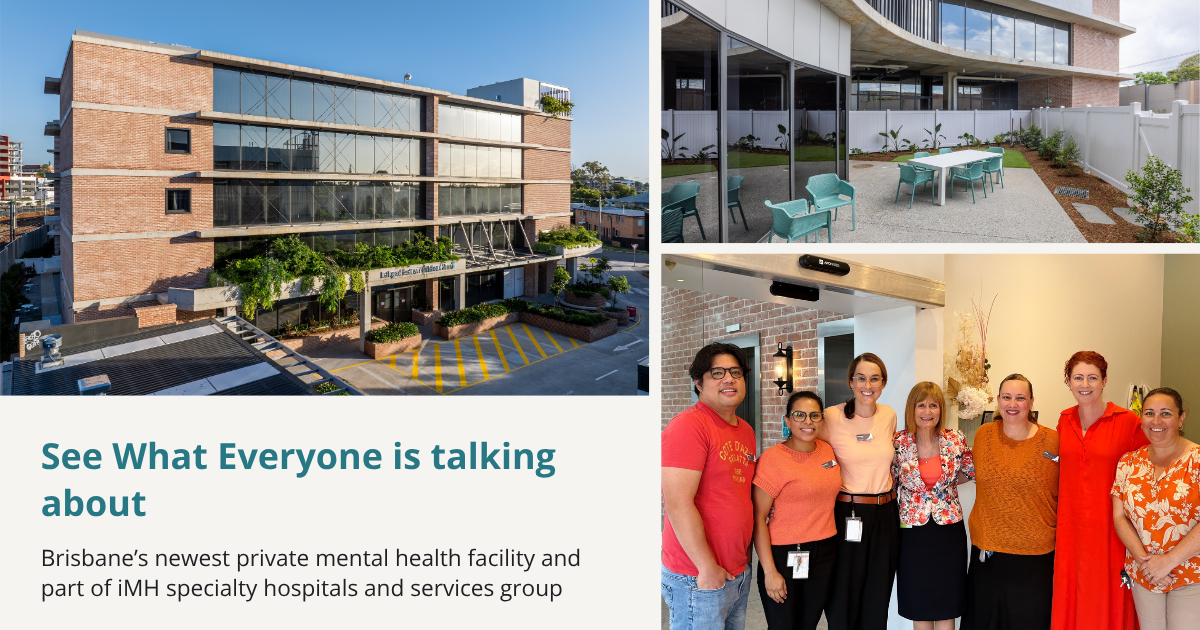
Nundah Private Hospital is a dedicated 58-bed private mental health hospital located in Brisbane's inner north, just 15 minutes from the CBD. The hospital is easily accessible via the Gateway Arterial Road and the Clem Jones Tunnel, and is a short walk from train and bus connections, making it a practical choice for patients across SouthEast Queensland.
Our OCD specialist team includes experienced psychiatrists, psychologists trained in ERP and CBT for OCD, occupational therapists, social workers, and mental health nurses. Together, we provide evidence-based, compassionate mental health support for OCD within a purpose-built therapeutic environment. Our allied health team is also available for private referrals through our Connected Care Clinic.
The key difference at MH Nundah Private is integration. OCD treatment is available across a full continuum of services, including inpatient admission, day intensives, structured day therapy programs, an on-site outpatient clinic, and a Hospital in the Home (HITH) program.
Care is guided by a consistent psychiatrist-led treatment plan, with the flexibility to step support up or down as your ne.eds change, ensuring continuity rather than fragmented, episodic care.
Access to the OCD clinic at Nundah Private begins with a referral to a psychiatrist. Our admissions and assessment team will then contact you to discuss your options, confirm your funding (private health insurance, DVA, WorkCover or self-funding) and outline any out-of-pocket costs before treatment begins. The simplest way to get started is to contact our team
What you can expect from the OCD program at Nundah Private Hospital?
Comprehensive psychiatric assessment
- You'll meet with a psychiatrist who will assess:
- Your OCD symptoms and how severe they are
- How OCD affects your daily life
- Previous treatments you've tried
- Any other mental health concerns
- This assessment determines the most appropriate treatment plan
Personalised treatment plan
- Your psychiatrist develops a plan tailored to your needs. Treatment usually focuses on:
- Exposure and Response Prevention (ERP), the main evidence-based therapy for OCD
- Cognitive behavioral therapy (CBT) techniques specific to OCD
- Medication if appropriate (commonly Selective serotonin reuptake inhibitors)
- Support from psychologists and other allied health professionals as needed
Active treatment
- Depending on your needs, treatment may be provided through:
- A structured program
- Inpatient admission
- Outpatient appointments
- Your care is coordinated by a specialist team
ERP and CBT sessions
- You'll work with a psychologist experienced in OCD
- Together, you'll create an exposure hierarchy - starting with less difficult situations and gradually working toward more challenging ones
- The aim is to face feared situations while resisting compulsions, helping reduce anxiety over time
Regular progress reviews
- Your psychiatrist monitors your progress
- Your treatment plan can be adjusted if needed as you improve or if challenges arise
Discharge and aftercare
- Before finishing the program, you'll develop a plan to maintain your progress
This typically includes relapse prevention strategies and follow-up care.
What about side effects or difficulties?
The information explains that ERP is designed to be challenging, especially at the beginning. During exposures, you may experience temporary increases in anxiety because the therapy involves facing feared thoughts or situations without performing compulsions. These exercises are:
- Planned collaboratively with your therapist.
- Introduced gradually.
- Conducted in a supportive, structured way.
How to get started: referral and next steps?
- Talk to your GP or treating doctor. Ask for a referral to a psychiatrist with admitting rights to Nundah Private Hospital. You can find out what is needed on our getting a referral page.
- Our admissions team will be in touch. Once your referral is received, our admissions and assessment team will call you for a phone assessment, confirm your insurer details, and outline your payment options
- We coordinate your care. Your referral is reviewed by a psychiatrist who confirms whether the OCD program is appropriate, and we manage your care coordination from there.
For GPs and specialists: referrals can be sent directly to our admissions team. See our referral process page for full details.
If you or someone you know needs immediate support, contact Lifeline on 13 11 14, or call 000 in an emergency.
Take the next step?
OCD can be an exhausting and isolating condition, particularly when previous attempts at treatment have not brought the relief you were hoping for. But not having responded to general therapy does not mean that effective treatment is out of reach; it may simply mean that structured ERP therapy within a specialist OCD clinic setting is what has been missing.
At Nundah Private Hospital, OCD treatment in Brisbane is delivered within a private mental health hospital, guided by experienced psychiatrists and a specialist multidisciplinary team, using the most evidence-based approaches available. Whether you are seeking assessment for the first time or looking for a more intensive level of support, we are here to help.
To find out whether the OCD program at Nundah Private is night for you or someone you care about, contact our team to discuss an assessment or referral. You can also explore our care pathways and treatment options to learn more about the full range of services available.